August is when the damage from a Birmingham summer becomes hard to ignore. Areas that were full and green in May are thin. Bare spots have opened up along walkways and in the middle of the yard. The lawn generally looks tired and a good rain hasn’t fixed.
The instinct is to throw down seed and hope for the best. But thin turf is a symptom, and until you know what caused it, anything you put down is likely to thin out again next August. Here’s how to figure out what actually happened.
Start With the Pattern
Where the turf thinned tells you most of what you need to know.
Thin along sidewalks, driveways, and the mail path. That’s compaction and traffic. Foot and vehicle traffic squeezes the pore space out of Birmingham’s clay soil, and roots can’t get air or water.
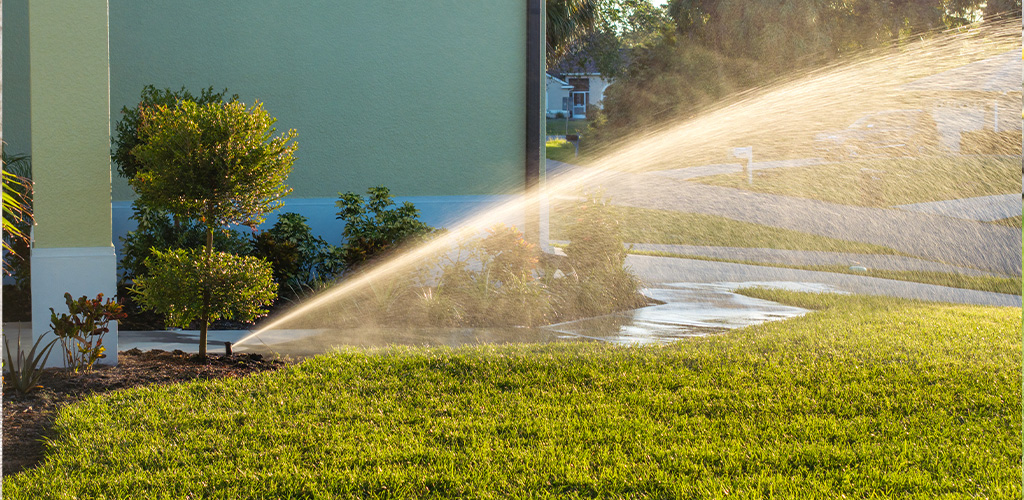
Thin in the same shape as an irrigation zone. That’s a coverage problem. A head that’s misaligned, clogged, or blocked by plant growth will produce a dry area with edges that follow the spray pattern.
Thin under trees or on the north side of the house. That’s shade. Bermuda needs six or more hours of direct sun. Below about four hours it will not hold no matter what you do to it.
Thin in irregular circles scattered across the lawn. That’s usually disease. Brown patch leaves large circular areas, and dollar spot leaves small silver-dollar-sized spots.
Thin in the hottest, most exposed areas near pavement. That points toward chinch bugs, which concentrate where heat radiates off hard surfaces.
Thin across large areas with no clear pattern. That’s most likely heat and drought stress, and it may still recover on its own once temperatures moderate.
Run Two Quick Tests
Before deciding on a fix, two checks take about five minutes and rule out the most damaging causes.
The pull test. Grab a handful of turf at the edge of a thin area and pull. Healthy grass resists. If it lifts away like carpet with no root resistance, something has eaten the roots. Look in the soil underneath for white, C-shaped grub larvae.
The screwdriver test. Push a long screwdriver into the soil in a thin area and then in a healthy area. If it slides in easily in one spot and you have to lean on it in the other, you’ve confirmed compaction.
What You Can Fix This Fall
Some of these problems have a fall solution and some don’t. Knowing the difference keeps you from spending money on the wrong thing.
Compaction. This is the most fixable and the most common. Fall is the right time to open the soil back up before dormancy. Our SoilTech aeration approach relieves compaction without pulling cores and leaving a mess behind, which matters on properties where appearance is a concern.
Irrigation gaps. Fix these now while you can still see which areas are dry. Run each zone and walk it. Note heads that are blocked, tilted, clogged, or spraying the driveway. Coverage problems left unaddressed will produce the same thin areas next year.
Insects and disease. Confirm what you’re dealing with and treat it. Damage from this season won’t reverse itself, but stopping active feeding or infection prevents it from spreading further before dormancy.
Shade. Be realistic here. If an area gets less than four or five hours of sun, Bermuda and Zoysia are not going to fill it in. The options are thinning the tree canopy to let more light through, switching those specific pockets to turf-type tall fescue, or converting the area to beds, mulch, or groundcover. Fighting it with more seed and more fertilizer just repeats the cycle.
Heat stress. Often this needs nothing but patience. Warm-season turf spreads by stolons and rhizomes and does most of its filling in during the following growing season. Give it a chance before intervening.
Should You Overseed?
For most full-sun Bermuda and Zoysia lawns in the Birmingham area, the answer is no. These grasses recover by spreading, and blanket overseeding creates competition, complicates your pre-emergent schedule, and adds disease pressure. We covered this in more detail in our post on when overseeding makes sense.
The exception is defined shade pockets, where turf-type tall fescue is the practical choice, and small bare spots where targeted repair speeds things up.
Set Up a Better Result Next Year
Most summer thinning traces back to something that was fixable in spring. Mowing too low, watering shallow and often instead of deep and infrequent, missing the pest window, or ignoring compaction until it’s severe. Getting the fall work right and starting next spring with a plan is what breaks the cycle.
If your lawn came through this summer worse than you expected, Steven’s Wack-n-Sack provides residential lawn care and turf management across Birmingham, Hoover, Vestavia Hills, Homewood, Alabaster, Pelham, Helena, Chelsea, and the surrounding metro. Contact us for an evaluation and we’ll tell you what’s actually going on out there.