Every spring, homeowners across Birmingham look at a lawn full of annual bluegrass, henbit, and chickweed and wonder where it came from. The answer is that it germinated the previous fall, while the lawn was heading into dormancy and nobody was paying attention.
By the time those weeds are visible in February and March, you’re stuck with post-emergent treatment on a lawn that can’t outgrow the competition. The far better play is stopping them before they ever sprout, and that decision gets made in early fall.
What Fall Pre-Emergent Actually Does
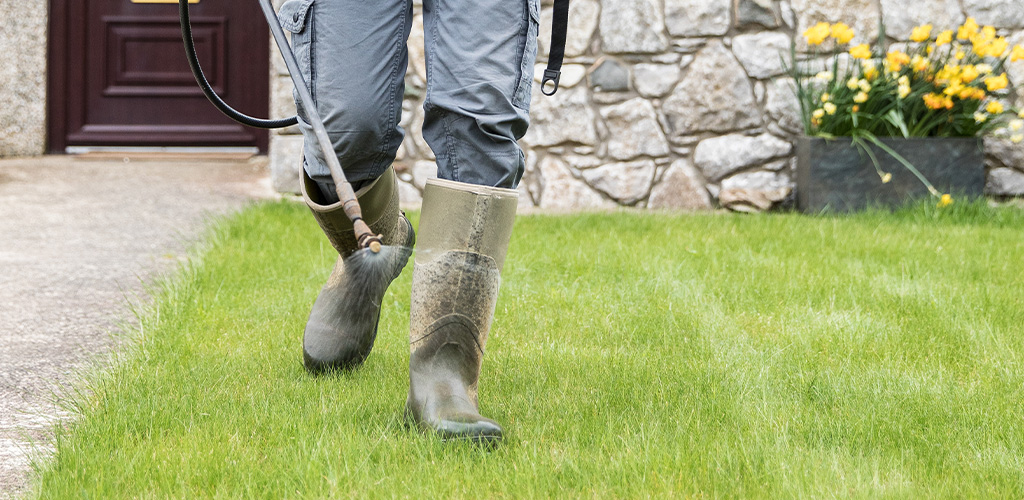
Pre-emergent herbicide doesn’t kill existing weeds. It creates a chemical barrier in the top layer of soil that interrupts weed seeds as they germinate. The seed sprouts, hits the barrier, and dies before it ever breaks the surface.
That means timing is everything. Apply too early and the barrier begins breaking down before the weed seeds are active. Apply too late and the seeds have already germinated, at which point the barrier does nothing.
This is a separate application from the spring pre-emergent we’ve written about before. Spring pre-emergent targets summer annuals like crabgrass and goosegrass. Fall pre-emergent targets an entirely different set of weeds on an opposite temperature trigger.
Which Weeds You’re Preventing
The winter annuals that take over Birmingham lawns are the ones that germinate in fall, grow slowly through winter while your Bermuda or Zoysia is dormant, and then explode in late February when temperatures moderate.
The most common in the Birmingham metro:
- Annual bluegrass (Poa annua). The most persistent winter weed in Central Alabama. Light green, clumping, produces seed heads even when mowed short. Once established it’s extremely difficult to control selectively.
- Henbit. The purple flowering weed that carpets lawns and roadsides across Alabama in March. Square stems, scalloped leaves, spreads fast.
- Common chickweed. Low, mat-forming, thrives in shaded and moist areas.
- Wild garlic and wild onion. Not controlled by pre-emergent, but their presence usually signals a lawn where winter weed pressure is already high.
- Annual ryegrass. Often shows up from contaminated seed or roadside spread.
The Timing Window in Birmingham
The trigger isn’t a calendar date, it’s soil temperature. Winter annual weed seeds begin germinating when soil temperatures at about four inches deep drop to roughly 70 degrees and hold there for several consecutive days.
In the Birmingham metro, that typically happens from mid-September through the first week of October, though it shifts year to year depending on how long summer heat holds. A hot, dry September pushes the window later. An early cool stretch pulls it forward.
A few practical guidelines:
- Watch soil temperature trends rather than air temperature. Air cools faster than soil, so the first cool mornings don’t mean the window has opened.
- Apply before germination, not after. If you’re seeing tiny green sprouts at the soil line, you’re already late.
- Most products need to be watered in within a few days of application to activate the barrier. A half inch of irrigation or rainfall is usually sufficient.
- Many programs use a split application, with a second treatment six to eight weeks later to extend control through late winter.
What Happens If You Miss It
Missing the fall window means dealing with winter weeds reactively. Post-emergent treatment works, but it comes with tradeoffs. You’re spraying a dormant or semi-dormant lawn, which limits product options. Control is less complete. And the weeds have already been competing for space, water, and nutrients for months, which leaves the turf thinner heading into spring green-up.
There’s also an appearance cost that matters for commercial properties and HOA communities. A dormant Bermuda lawn full of bright green Poa annua in January looks noticeably worse than a clean dormant lawn, and it’s the kind of thing residents and tenants comment on.
If You’re Planning to Overseed
One important conflict to know about: pre-emergent herbicide prevents grass seed from germinating the same way it prevents weed seed from germinating. If you’re planning to overseed shaded fescue areas this fall, you can’t apply a standard pre-emergent to those zones.
The usual approach is treating the full-sun warm-season turf with pre-emergent while leaving overseeded areas out of the application. It requires a little planning, which is another reason to think this through in August rather than improvising in October.
Common Mistakes
- Applying on the calendar instead of on conditions. The date that worked last year may be wrong this year.
- Skipping the watering-in step. An unactivated product sits on the surface and provides no barrier.
- Uneven application. Gaps in coverage become obvious in February when weeds appear in stripes.
- Disturbing the barrier. Aggressive raking, dethatching, or core aeration after application breaks the layer and reduces effectiveness. Schedule aeration before the pre-emergent application, not after.
If You’re on a Turf Management Program
For clients on a turf management program with Steven’s Wack-n-Sack, fall pre-emergent is part of the annual schedule. We track soil conditions across the Birmingham metro and time the application to the season rather than the calendar.
If you’re tired of fighting winter weeds every February, Steven’s Wack-n-Sack provides residential and commercial turf management across Birmingham, Hoover, Vestavia Hills, Homewood, Alabaster, Pelham, Helena, Chelsea, and the surrounding area. Contact us before the fall window opens.