
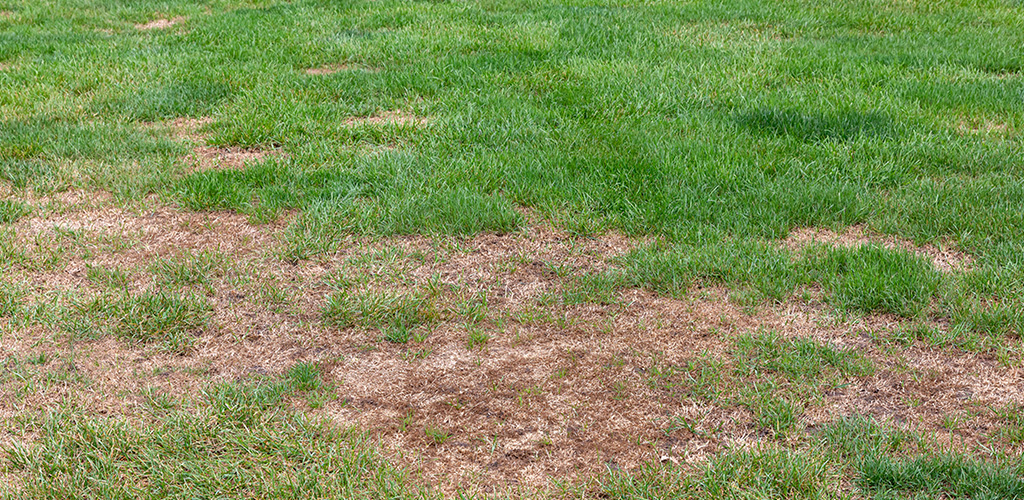
Most lawn pests in Birmingham make themselves known by the damage they leave behind. Chinch bugs show up as brown patches that don’t respond to water. Armyworms chew grass to the ground seemingly overnight. But grubs work underground, out of sight, feeding on the root system of your lawn. By the time you see the damage, the destruction has already been done.
The key to managing grubs in Birmingham isn’t treatment after the fact. It’s prevention. And late July is the last practical window to apply a preventive product before the new generation of larvae hatches and begins feeding.
What Are Grubs?
Grubs are the larval stage of several beetle species, most commonly Japanese beetles, June bugs, and masked chafers. Adult beetles are active in Birmingham from late May through July. During that time, they mate and lay eggs in the soil of well-maintained, irrigated lawns. The eggs hatch in late July through August, and the newly hatched larvae immediately begin feeding on grass roots.
The larvae are white, C-shaped, and about the size of a penny when fully curled. They live in the top few inches of soil, feeding on the root system of your turf. As they grow through late summer and fall, the feeding intensifies, and that’s when visible damage appears.
What Grub Damage Looks Like
Grub damage typically shows up in late August through October in the Birmingham area. It looks different from most other lawn problems:
- Irregular brown patches that don’t follow irrigation patterns or match heat dormancy symptoms
- Turf that peels up like a carpet when you pull on it, because the roots have been eaten away
- Increased animal activity on the lawn, particularly birds, armadillos, raccoons, or moles digging for grubs
- Spongy feel when walking on affected areas, even when the soil isn’t wet
The damage pattern is often confused with drought stress or disease, but the root pull test is definitive. If you can roll back a section of brown turf and find white grubs underneath, that’s your answer.
Why Prevention Matters More Than Treatment
Once grubs are actively feeding and causing visible damage, your treatment options are limited. Curative products exist, but they work more slowly, are less reliable, and the lawn has already sustained root damage that takes weeks or months to recover from.
Preventive products, on the other hand, are applied before the eggs hatch. They create a treated zone in the soil that kills newly hatched larvae before they can establish and feed. Prevention is more effective, more affordable, and avoids the turf loss that comes with treating after the fact.
When to Apply in Birmingham
Timing is everything with grub prevention. Here’s the general window for the Birmingham metro:
- Adult beetles are laying eggs: Late June through July
- Eggs hatch: Late July through mid-August
- Preventive application window: Late June through late July
If you’re reading this at the end of July, you’re at the tail end of the window. A preventive application made now will still be effective as long as the product is watered into the soil before the eggs finish hatching.
The most common preventive active ingredients are:
- Chlorantraniliprole (GrubEx). The longest-lasting option. Can be applied as early as late April and provides season-long control. If it wasn’t applied earlier in the season, it’s still effective through July.
- Imidacloprid. Effective when applied in late June through mid-July. Needs to be watered in within 24 hours of application.
- Thiamethoxam. Similar timing and effectiveness to imidacloprid.
All three require watering in after application to move the product into the root zone where grubs will be feeding. Without adequate irrigation or rainfall after application, the product sits on the surface and doesn’t reach the target.
Which Birmingham Lawns Are Most at Risk?
Not every lawn in the Birmingham area gets grubs, but some properties are more vulnerable than others:
- Well-irrigated lawns. Female beetles prefer to lay eggs in moist soil. Consistently watered lawns are more attractive egg-laying sites than dry, dormant ones.
- Lawns near wooded areas or ornamental gardens. Japanese beetles are attracted to roses, crape myrtles, and other ornamentals. Properties with active beetle populations nearby have higher grub risk.
- Properties with a history of grub damage. If you’ve dealt with grubs before, the beetle population in your area is established.
- Wooded suburban areas like Hoover, Vestavia Hills, and Homewood tend to see higher beetle populations than dense urban areas.
What to Do If You Missed the Prevention Window
If it’s already August and you didn’t apply a preventive product, monitor your lawn through late summer and fall for the damage signs listed above. If grubs are present, curative products containing trichlorfon (Dylox) can be applied to actively feeding populations. They work fastest when grubs are small and near the surface, typically late August through September.
Even if you need a cure this year, plan to apply a preventive product next June or July. Consistent annual prevention is the most reliable way to keep grub populations from causing recurring damage.
If You’re on a Steven’s Wack-n-Sack Turf Management Program
For clients enrolled in a turf management program with Steven’s Wack-n-Sack, grub prevention can be incorporated into the seasonal treatment plan. Our team monitors beetle activity across the Birmingham metro, applies preventive treatments during the optimal window, and watches for early signs of grub damage during regular property visits.
If grubs have been a problem on your property in the past, or if you want to make sure they don’t become one, Steven’s Wack-n-Sack provides residential lawn care and turf management across Birmingham, Hoover, Vestavia Hills, Homewood, Alabaster, Pelham, Helena, Chelsea, and the surrounding area. Contact us to discuss adding grub prevention to your lawn care plan.