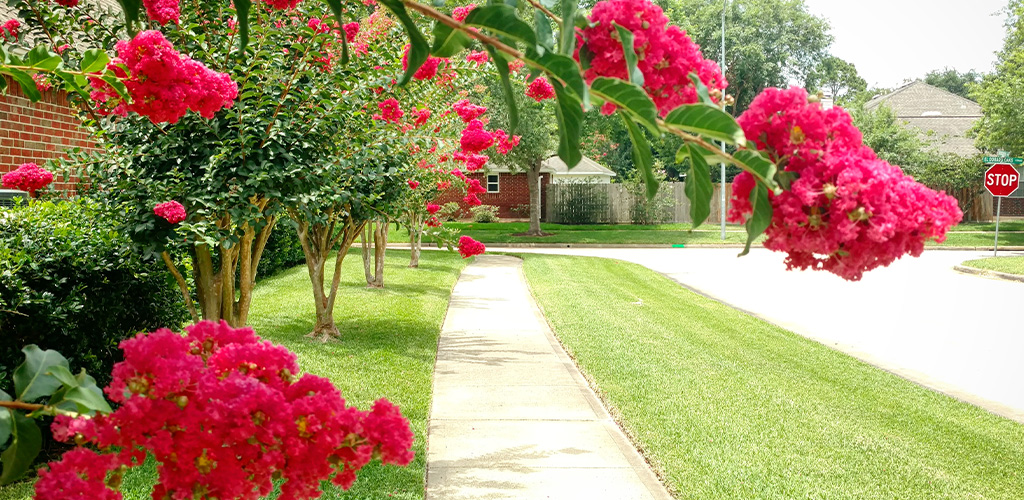
If there’s a tree that defines summer in Birmingham, it’s the crape myrtle. From late June through August, they light up neighborhoods across the metro in shades of pink, red, purple, white, and lavender. You’ll find them in front yards, along commercial property lines, at HOA entrances, and lining streets through Hoover, Vestavia Hills, Homewood, and everywhere in between.
Crape myrtles earn their popularity because they deliver dramatic summer color during the months when most other flowering trees and shrubs have finished for the season. They thrive in Birmingham’s heat, tolerate our clay soil, and require relatively little care once established. We covered proper pruning techniques in a previous post. This month, we’re focusing on varieties, placement, and seasonal care.
Why Crape Myrtles Thrive in Birmingham
Crape myrtles are tailor-made for Birmingham’s climate. They love heat, perform best in full sun, and handle the humidity that challenges many other ornamental trees. Most varieties are hardy through USDA zone 7, which covers the entire Birmingham metro.
They’re also drought tolerant once established, which matters during the stretches of July and August when rainfall can be unpredictable. While they appreciate consistent moisture during their first year or two in the ground, mature crape myrtles can handle dry periods without significant stress.
Birmingham’s long, warm growing season gives crape myrtles an extended bloom window. In cooler climates, bloom time may last four to six weeks. In the Birmingham area, many varieties bloom for eight weeks or more, often from late June into September.
Choosing the Right Variety
Crape myrtles range from compact shrub forms under 4 feet tall to large trees reaching 30 feet or more. Choosing the right variety for the space prevents the over-pruning problems that are so common across Birmingham.
Large varieties (20-30 feet):
- Natchez. White blooms, cinnamon-colored bark, excellent disease resistance. One of the most widely planted large crape myrtles in the Southeast.
- Muskogee. Lavender blooms on a fast-growing tree. Good for screening and shade.
- Tuscarora. Coral-pink blooms with strong form. A reliable performer across the Birmingham area.
Medium varieties (12-20 feet):
- Dynamite. True red blooms that hold their color without fading. One of the best reds available.
- Catawba. Deep purple blooms. Compact enough for smaller properties but still substantial.
Dwarf and semi-dwarf varieties (3-10 feet):
- Pocomoke. Deep rose-pink blooms on a compact 3 to 4 foot plant. Works well in foundation plantings and borders.
- Acoma. White, semi-weeping form that stays under 10 feet. Good for smaller landscapes.
The most important guideline: match the mature size to the available space. A Natchez planted 5 feet from the house will outgrow the spot within a few years, leading to the aggressive “crape murder” topping that damages the tree’s form and long-term health.
Common Mistakes Birmingham Homeowners Make
Planting in too much shade. Crape myrtles need at least 6 hours of direct sun to bloom well. In partial shade, they’ll grow but bloom production drops significantly and they become more susceptible to powdery mildew.
Ignoring aphids and sooty mold. Crape myrtle aphids are common in Birmingham during summer. They feed on leaves and excrete honeydew, which leads to black sooty mold on the foliage and on anything parked underneath. The mold itself doesn’t damage the tree, but it’s unsightly. Treating the aphid population with horticultural oil or insecticidal soap addresses the root cause.
Over-fertilizing. Crape myrtles don’t need heavy feeding. Excessive nitrogen pushes foliage growth at the expense of blooms. A single application of balanced fertilizer in early spring is usually sufficient.
Caring for Crape Myrtles in Summer
During their bloom period in July and August, crape myrtles need minimal attention:
- Water newly planted trees deeply once a week if rainfall is insufficient. Established trees rarely need supplemental irrigation in a normal Birmingham summer.
- Don’t prune during bloom. Save any shaping or structural pruning for late winter, after the tree is dormant. Removing spent flower clusters during summer can encourage a second flush of blooms, but it’s optional and labor-intensive on large trees.
- Monitor for aphids on new growth, especially on the undersides of leaves and at branch tips. Treat early if sooty mold is developing.
- Enjoy the bark. One of the underappreciated features of crape myrtles is the exfoliating bark that develops on mature specimens. Natchez and Muskogee in particular develop beautiful peeling bark in shades of cinnamon, gray, and cream.
A Birmingham Summer Staple
Crape myrtles are at their best right now. Whether you’re choosing new plantings, maintaining existing trees, or rethinking a landscape plan, understanding varieties and mature sizes prevents problems and maximizes the impact these trees can deliver.
If your landscape needs new plantings, maintenance, or seasonal care, Steven’s Wack-n-Sack provides professional landscaping services for residential and commercial properties across Birmingham, Hoover, Vestavia Hills, Homewood, Alabaster, Pelham, Helena, Chelsea, and the surrounding metro. Contact us to discuss what your property needs.