Garden centers are busiest in April. Everybody buys plants in spring, gets them in the ground over a weekend, and feels good about it. Then July arrives, those plants have a root system the size of the pot they came in, and half of them are struggling.
Fall is the better window in Central Alabama, and it isn’t close. Trees and shrubs planted from October through early spring go into their first summer with an established root system instead of trying to build one while the temperature is over 95.
What’s Actually Happening Underground
The reason has to do with the gap between soil temperature and air temperature.
Roots keep growing as long as soil stays above roughly 50 degrees. Around Birmingham, soil holds that warmth well into December, and it comes back up in February. Meanwhile the air cools off in October, the plant drops its leaves or slows its top growth, and it stops spending energy on foliage.
That combination is exactly what a new plant wants. Warm soil below, cool air above, and nothing competing for resources. All the plant’s energy goes into roots.
A shrub planted in October gets root growth through late fall, a pause during the coldest weeks, and another push from February through April. By the time Birmingham hits its first 90 degree day, it has been building roots for seven months.
The same shrub planted in April gets maybe six to eight weeks before summer heat shuts everything down. It spends its first summer in survival mode, and it needs constant water to get through.
Winter Rain Does the Work
There’s a practical angle too. Central Alabama gets most of its rainfall between November and April. Plant in fall and the weather handles a large share of your establishment watering.
Plant in spring and you own that job through the hottest, driest stretch of the year. On a property with several new trees and shrubs, that difference is real money in water and real time hauling a hose.
What to Plant in Fall
Fall works for most woody and perennial material:
- Trees. Maples, oaks, river birch, redbud, dogwood, magnolia, crape myrtle
- Shrubs. Azaleas, hollies, camellias, loropetalum, viburnum, abelia, boxwood
- Perennials. Daylilies, coneflower, salvia, ornamental grasses
- Cool season color. Pansies, violas, snapdragons, ornamental cabbage and kale, planted once soil temperatures drop
- Spring bulbs. Daffodils, tulips, and alliums go in from late October through November
What Not to Plant in Fall
A few things should wait:
- Warm season annuals. Begonias, pentas, lantana, and vinca will not survive the first hard freeze.
- Warm season sod. Bermuda and Zoysia laid in fall have no time to root before dormancy and often fail over winter. Wait until late spring.
- Marginally hardy plants. Anything sitting at the edge of its cold tolerance for our area does better with a full growing season behind it. Plant those in spring.
Planting It Right in Birmingham Clay
Our soil is the biggest variable. A few things matter more here than they would in better ground:
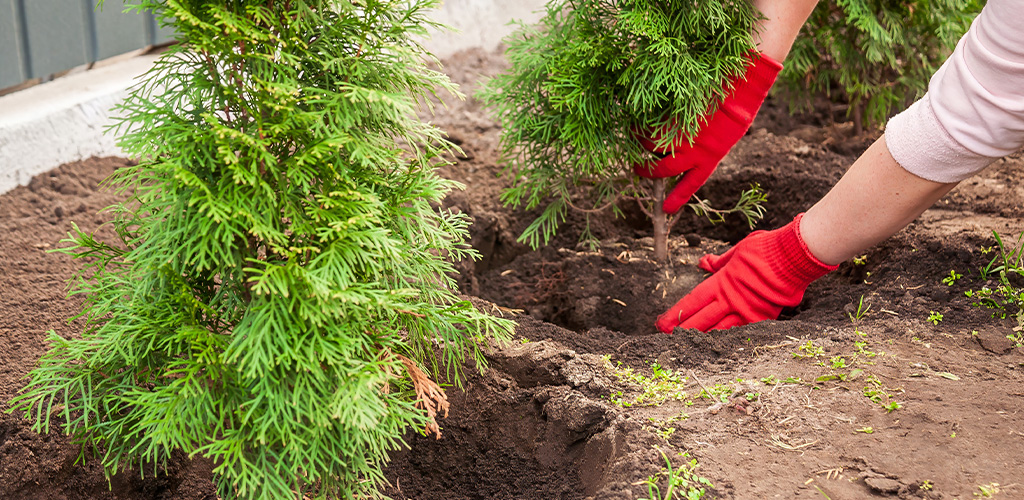
Dig wide, not deep. The hole should be two to three times the width of the root ball but no deeper. Roots spread sideways far more than they go down.
Don’t over-amend the backfill. This one is counterintuitive. Filling a hole in clay with rich, loose soil creates a bathtub. Water collects in the amended pocket, roots circle inside it instead of pushing into the surrounding soil, and the plant drowns or stays stunted. Backfill with the native soil you dug out.
Set it at or slightly above grade. Planting too deep is the most common way homeowners kill new trees. The root flare, where the trunk widens at the base, should be visible at the surface.
Mulch two to three inches, and keep it off the trunk. Mulch piled against bark holds moisture there and invites rot.
Water through winter dry spells. Dormant does not mean it needs nothing. If a stretch of two or three weeks goes by without rain, give new plantings a deep soak.
Get on the Schedule Before It Fills
Fall is the busiest stretch of the year for landscape work in the Birmingham area. Between planting, bed renovations, aeration, and leaf management ramping up in late October, the calendar tightens fast.
This is also worth thinking through alongside the rest of your fall plan. Aeration, fall pre-emergent, and planting all have their own timing, and sequencing them correctly keeps one from working against another.
Let’s Plan Your Fall Project
Whether it’s a few replacement shrubs, a full bed renovation, or trees you have been meaning to put in for two years, fall is when to do it in Alabama.
Steven’s Wack-n-Sack provides landscaping and planting services for residential and commercial properties across Birmingham, Hoover, Vestavia Hills, Homewood, Alabaster, Pelham, Helena, Chelsea, and the surrounding metro. Contact us to walk your property and get on the fall schedule.