By mid-July in Birmingham, your landscape beds have been through six or more weeks of sustained heat, afternoon thunderstorms, and humidity. Even beds that looked fresh and full after the spring planting are starting to show the strain. Mulch has thinned out, some plants have faded, weeds are pushing through, and the overall look has shifted from “just planted” to “making it through summer.”
This is the point where many homeowners across Birmingham, Hoover, Vestavia Hills, and surrounding areas let beds go until fall. But a few targeted adjustments now can keep things looking presentable through August and into September without a full replant.
Assess What’s Working and What Isn’t
Before spending time or money, walk your beds and sort your plants into three categories:
Thriving. Plants that are blooming, holding their form, and look healthy. Leave these alone. If you planted heat-tolerant summer annuals like pentas, lantana, or begonias in May, most should fall into this category.
Struggling but recoverable. Plants that look stressed (wilting in afternoon heat, sparse blooms, leggy growth) but still have healthy foliage and root systems. These usually respond to watering adjustments, a light feed, or pruning back to encourage fresh growth.
Done. Plants that are dead, mostly brown, or so far gone that no amount of care will bring them back. Pull these out and either replace them or mulch over the gap. Leaving dead plants in the bed makes the entire area look neglected.
Refresh the Mulch
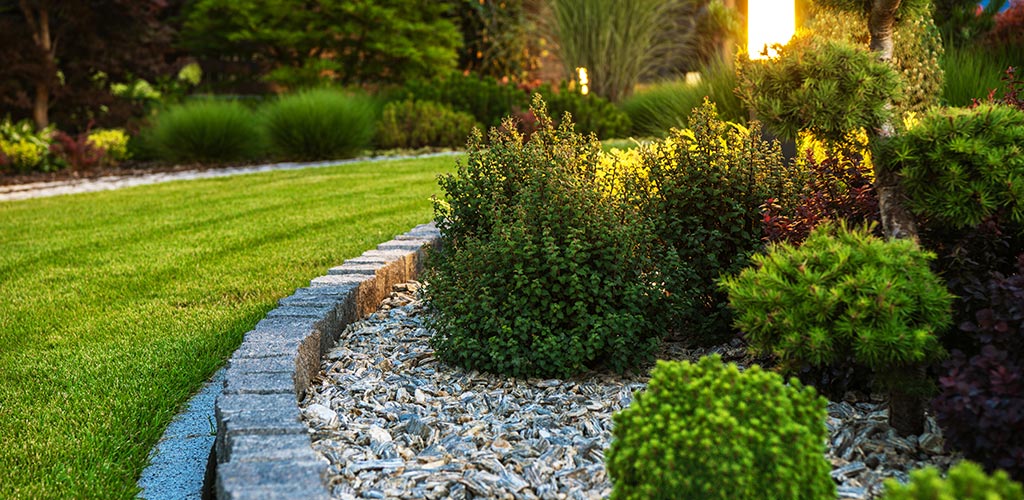
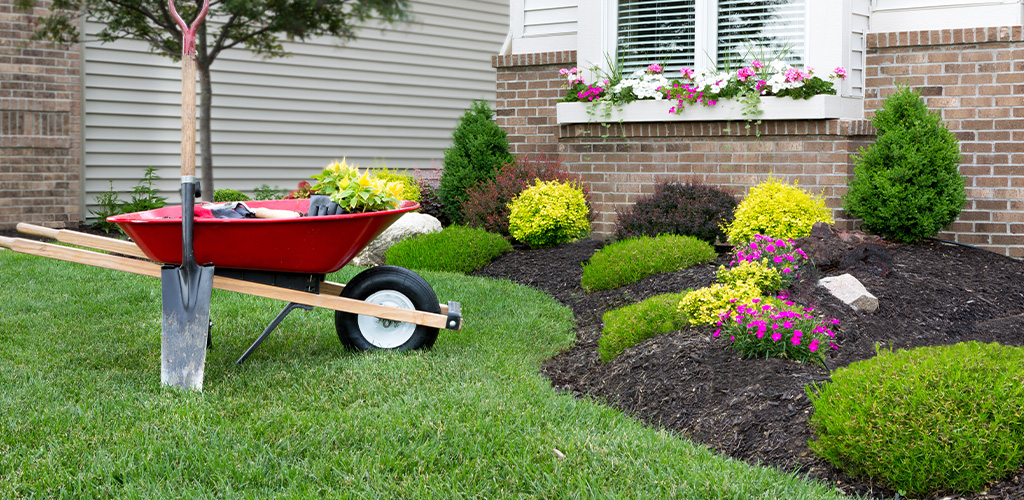
This is the single most impactful thing you can do for your beds in July. Mulch applied in spring has likely broken down or washed thin by now, especially in beds that receive direct afternoon sun or are on a slope.
Top off to 2 to 3 inches of coverage. Fresh mulch does three things that matter in July:
- Retains soil moisture so plant roots aren’t drying out between waterings
- Suppresses weed germination, which is aggressive in Birmingham’s summer heat
- Gives the beds an immediate visual refresh that makes the surrounding plants look better by contrast
Use the same mulch type that’s already in the bed for a consistent appearance. Avoid piling mulch against plant stems or tree trunks, which traps moisture and can cause rot.
Adjust Your Watering
Beds and turf have different water needs, but many homeowners in the Birmingham area water both on the same irrigation schedule. In July, landscape beds typically need more frequent watering than they did in spring, but less volume per session than turf areas.
A few adjustments:
- Water beds in the early morning. Same principle as your lawn irrigation. Morning watering reduces evaporation and keeps foliage dry heading into the afternoon.
- Check drip irrigation or soaker hoses. If your beds are on drip lines, make sure emitters aren’t clogged or shifted away from the root zones. Drip systems are efficient but only if they’re delivering water where it’s needed.
- Hand water containers. Potted plants and container plantings dry out much faster than in-ground beds in July heat. They may need daily watering during the hottest stretches.
Deal With Weeds Now
Weeds don’t take a summer break. In fact, some of the most aggressive Birmingham weeds are at their peak in July. Nutsedge, spurge, and various summer broadleaf weeds thrive in the heat and can overtake a bed quickly if left unchecked.
Pull weeds when they’re small. Once they establish root systems or start setting seed, the problem multiplies. If you’re dealing with nutsedge in beds, hand pulling is particularly ineffective because it stimulates the underground tubers. Targeted herbicide treatment is the better option.
The combination of fresh mulch (for suppression) and spot treatment (for existing weeds) is the most effective one-two punch for bed weed control in mid-summer.
Give Struggling Plants a Boost
Plants that are still alive but looking tired can often be brought back with a couple of simple interventions:
Prune back leggy growth. Annuals like coleus and petunias tend to stretch and get leggy by mid-summer. Cutting them back by a third encourages bushier, fuller regrowth and often triggers a new flush of blooms.
Apply a light liquid fertilizer. If plants were fertilized at planting in May but haven’t been fed since, a mid-summer liquid feed can provide the boost they need to keep producing through August. Avoid heavy granular applications in the heat.
Relocate struggling container plants. If a potted plant is declining in full afternoon sun, moving it to a spot with morning sun and afternoon shade may be all it takes to turn it around.
Know When to Replace
Some plants simply won’t make it through a Birmingham July regardless of care. Anything that was borderline heat-tolerant at planting or got hit by a stretch of 98-degree days without adequate water may be past saving.
Replacing a few plants in July is better than leaving gaps in the bed for the next three months. Good replacement options for mid-summer planting in Birmingham include pentas, lantana, vinca, and heat-tolerant coleus varieties. These can go in the ground now and still give you color through October.
Do You Need Help With Your Landscape Beds?
If your landscape beds need attention this summer, Steven’s Wack-n-Sack provides professional residential and commercial landscaping services across Birmingham, Hoover, Vestavia Hills, Homewood, Alabaster, Pelham, Helena, Chelsea, and the surrounding metro. Contact us to discuss what your property needs.