If your landscape beds are looking a little sparse after the pansies faded and the spring shrubs finished blooming, now is the time to add summer color. Late May through early June is the ideal window for planting summer annuals in the Birmingham metro. The soil is warm, the threat of cool nights has passed, and plants installed now have time to establish roots before the peak heat of July and August arrives.
What Makes a Good Summer Annual for Birmingham?
Not every flower you see at the garden center is built for central Alabama’s summer. Our combination of sustained heat (90+ degree days from June through September), high humidity, afternoon thunderstorms, and clay-heavy soil eliminates a lot of options that work fine in cooler climates.
The best summer annuals for the Birmingham area share a few characteristics:
- Heat tolerance. They don’t wilt, bleach out, or stop blooming when temperatures hit the mid-90s.
- Humidity tolerance. They resist the fungal issues that thrive in Alabama’s muggy conditions.
- Continuous bloom. They produce flowers from planting through fall without needing constant deadheading or maintenance.
- Adaptability to clay soil. They perform in Birmingham’s heavy soil, especially when beds are properly amended and mulched.
Best Summer Annuals for Birmingham Homeowners
Here are the most reliable options for residential landscape beds, borders, and containers across the Birmingham metro.
Begonias
Begonias are one of the most versatile summer annuals for Birmingham homeowners. Wax begonias in particular handle sun and shade equally well, maintain a compact mounding form, and bloom continuously without deadheading. They come in red, pink, white, and bicolor varieties. For shaded beds or north-facing foundations, begonias are often the best choice because many other summer annuals need full sun to perform.
Best for: Shade to partial sun beds, foundation plantings, mass plantings along walkways.
Pentas
Pentas are one of the strongest performers in full sun Birmingham beds. They produce clusters of star-shaped flowers in red, pink, white, and lavender and bloom continuously from planting through the first frost. They handle the worst of Alabama’s heat without slowing down and are excellent for attracting butterflies and hummingbirds to the yard.
Best for: Full sun beds, pollinator gardens, cutting gardens, and anywhere you want consistent color through the hottest months.
Zinnias
Zinnias are a classic summer annual that thrives in Birmingham’s heat. They come in nearly every color and range from compact border varieties to tall cutting types. They prefer full sun and actually perform better in hot weather than in cool conditions. The main watch-out is powdery mildew, which can affect older varieties in humid weather. Newer disease-resistant cultivars like the Profusion and Zahara series hold up much better in Alabama’s climate.
Best for: Full sun cutting gardens, mass plantings, beds where you want bold color and height.
Lantana
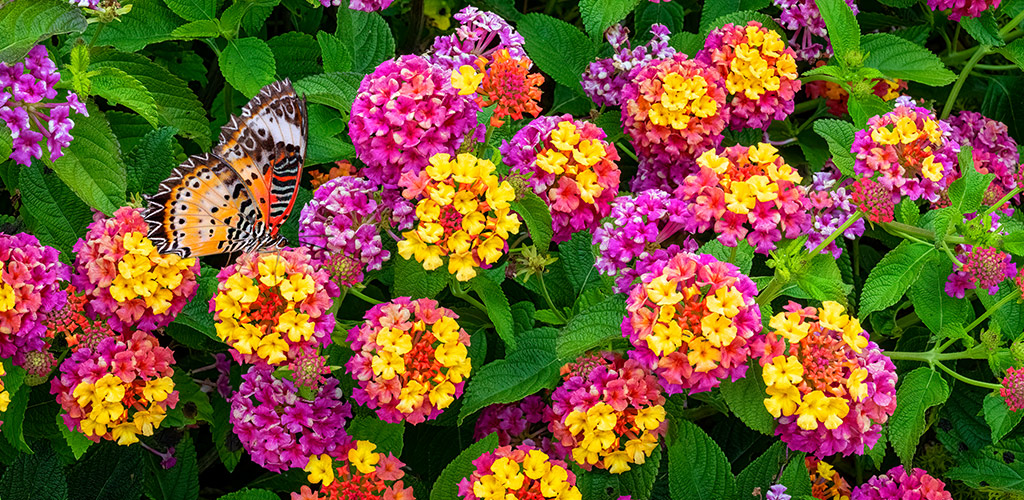
If you want a plant that genuinely does not care about Birmingham’s summer heat, lantana is it. It’s drought tolerant, heat tolerant, and blooms nonstop in warm colors ranging from yellow and orange to red and multicolor blends. Lantana spreads readily and works well as a ground cover, in raised beds, or cascading from containers. It’s also one of the lowest-maintenance annuals you can plant since it needs almost no attention once established.
Best for: Full sun beds, slopes, containers, and any spot where you want color without constant watering.
Coleus
For beds that need visual impact without relying on flowers, coleus delivers through foliage color alone. The range of leaf patterns and colors available is enormous: chartreuse, burgundy, pink, orange, multicolor, and everything in between. Newer sun-tolerant varieties have expanded coleus beyond the shade garden, but it still performs best in partial shade in Birmingham. Pinching the flower spikes when they appear keeps the plant bushy and focused on leaf production.
Best for: Shade to partial shade beds, container plantings, mixed borders where you want texture and foliage contrast.
Vinca (Catharanthus)
Vinca is a Southeast staple for a reason. It handles heat, doesn’t need much water once established, and produces cheerful blooms in pink, white, red, and purple from May through fall. The one requirement is good drainage. In Birmingham’s clay soil, planting vinca in raised beds or amending the planting area with compost helps prevent root rot, which is its main vulnerability.
Best for: Full sun beds with good drainage, containers, mass plantings along borders and driveways.
Caladiums
Caladiums aren’t technically a flowering annual, but they’re one of the most popular choices for adding bold color to shaded Birmingham beds. The large, heart-shaped leaves come in striking combinations of white, pink, red, and green. They grow from tubers planted after the soil warms (which it has by late May in Birmingham) and provide color through the entire summer.
Best for: Deep shade to partial shade beds, under trees, foundation plantings, and container combinations.
Bed Preparation Tips for Birmingham Homeowners
Getting the bed ready before planting makes a significant difference in how summer annuals perform through the season.
- Amend the soil. Birmingham’s clay soil holds moisture but drains slowly. Working 2 to 3 inches of compost into the top 6 inches of soil improves both drainage and nutrient availability.
- Refresh mulch after planting. Two to three inches of mulch around new plantings helps retain moisture, suppress weeds, and moderate soil temperature during the hottest months.
- Water deeply at planting. Give newly installed annuals a thorough soaking immediately after planting and keep the soil consistently moist for the first two weeks while roots establish.
- Space appropriately. Resist the urge to plant too close together. Annuals that look sparse at planting will fill in quickly in Birmingham’s warm weather. Crowded beds restrict air circulation and increase disease risk.
Getting the Most Out of Your Summer Annuals
Once the annuals are in the ground, a few simple practices keep them performing through the season:
- Water in the morning. Early morning watering reduces evaporation loss and keeps foliage dry heading into the afternoon, which helps prevent fungal issues.
- Deadhead when needed. Some annuals like pentas and begonias are self-cleaning and don’t require deadheading. Others like zinnias benefit from regular removal of spent blooms to encourage new flower production.
- Feed lightly. A balanced slow-release fertilizer applied at planting is usually sufficient for the season. If plants start looking pale or slowing down in mid-summer, a light liquid feed can give them a boost.
- Monitor for pests. Whiteflies, aphids, and spider mites can show up on summer annuals during hot, dry stretches. Catching them early with a blast of water or a targeted treatment prevents larger infestations.
If You’d Rather Not Do the Work Yourself
Selecting plants, prepping beds, and installing summer annuals takes time and effort, especially across multiple beds. Steven’s Wack-n-Sack provides professional landscaping services that include seasonal flower installation for residential properties. We handle the selection, bed prep, planting, and mulch so your beds go from empty to full without a weekend project.
If you’re a homeowner in Birmingham, Hoover, Vestavia Hills, Homewood, Alabaster, Pelham, Helena, Chelsea, or the surrounding metro area and want help adding summer color to your landscape, contact us to discuss your options.