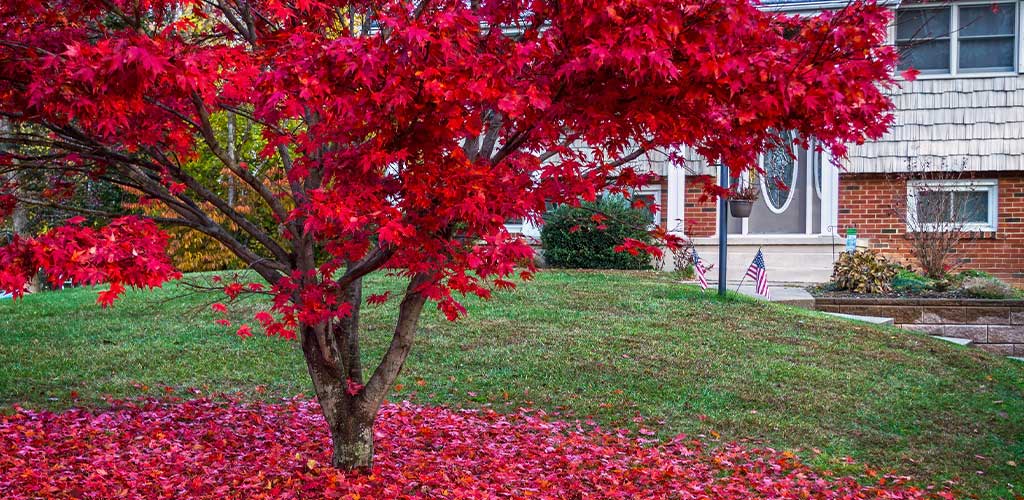
Most of Birmingham’s fall color comes from the ridges: sweetgum, hickory, and oak turning across the hillsides. Inside the yard, few plants can match a Japanese maple in late fall. Depending on the variety, the leaves go scarlet, orange, gold, or deep red, and one well-placed tree can carry the whole front of a house.
Japanese maples also have a reputation for being fussy in Alabama, and it’s partly earned. Most are rated for USDA zones 5 through 8, and much of the Birmingham metro sits in zones 7b and 8a, near the warm end of that range. In the wrong spot, a Japanese maple will scorch every summer. In the right spot, it’s long-lived and asks very little of you.
It Comes Down to Afternoon Shade
In their native range, Japanese maples grow beneath taller trees. They’re built for filtered light, cool roots, and steady moisture, and a Birmingham July and August push against all three.
Japanese maples do best in filtered shade and can suffer leaf scorch in full sun. Scorch shows up as brown, crispy leaf edges. It rarely kills an established tree, but it leaves the tree looking rough from midsummer on and can dull the fall color.
Where you put it matters more than anything else you’ll do for it:
- Morning sun, afternoon shade. An east-facing spot, or one shaded by the house or larger trees from early afternoon on, is ideal.
- Out of the wind. Drying wind makes scorch worse.
- Well-drained soil. Japanese maples want steady moisture but won’t tolerate soggy ground. In heavy clay, plant slightly above grade.
- Room to grow. Upright types can reach 15 to 25 feet. Check the mature size before you plant one next to the house.
Upright or Laceleaf?
Japanese maples fall into two broad groups, and in our climate the difference matters.
Upright types have broader, hand-shaped leaves on a tree form, and that heavier leaf holds up better to sun and heat. Bloodgood is the classic, a deep burgundy maple that turns red in fall. Virginia Tech Extension notes that it holds its red color better than most Japanese maples. Emperor 1 looks similar and is often recommended in the South because it leafs out later in spring, which helps it dodge a late frost. That matters here, where the average last freeze falls around March 25.
Laceleaf types, also called dissectums, have finely cut, feathery leaves on a low, weeping form. They’re beautiful, but that delicate foliage is the first to scorch. Crimson Queen and Tamukeyama are two of the most widely sold. In Birmingham, give any laceleaf solid afternoon shade.
If you want something for winter too, look at Sango-kaku, the coral bark maple. Its leaves turn gold in fall, and once they drop, the young branches glow coral-red until spring.
When the Color Peaks
Fall color timing shifts from year to year with the weather. Around Birmingham, Japanese maples usually color up from late October into November. A run of cool, clear nights and sunny days brings out the strongest color. A warm, wet fall tends to mute it.
Planting and Care
Plant in fall. As we covered in why fall beats spring for planting, trees planted now build roots through winter and head into their first summer far better prepared. For a heat-sensitive tree, that head start matters.
Water the first two summers. A deep soak once or twice a week during dry stretches keeps a young tree from stressing.
Mulch the roots. Two to three inches of mulch keeps roots cooler and holds moisture. Keep it a few inches off the trunk.
Go easy on fertilizer. Japanese maples grow slowly by nature. Heavy feeding pushes soft growth that scorches easily.
Prune lightly, and only when dormant. Most need very little. Take out dead or crossing branches in late winter and leave the natural shape alone. It’s most of the appeal.
Building a Bed Around One
A Japanese maple does its best work framed by evergreens that carry the bed through winter, like Oakleaf holly, and it picks up the seasonal handoff from late-summer plants like American beautyberry.
If you’re thinking about adding one this fall or want help finding the right spot, Steven’s Wack-n-Sack provides landscaping services for residential and commercial properties across Birmingham, Hoover, Vestavia Hills, Homewood, Alabaster, Pelham, Helena, Chelsea, and the surrounding metro. Contact us to talk it through.