Every fall, a lot of Birmingham homeowners make the same reasonable-sounding plan: wait until the last leaf comes down, then clean it all up at once. One big job instead of several small ones.
The problem is that in Central Alabama, “the last leaf” can be a long way off. Maples and sweetgums drop early, but many oaks hang on to their leaves well into December. That means some leaves sit on the lawn for six weeks or more before anyone touches them, and in a Birmingham winter, that’s long enough to cause problems.
The Timing Problem
Leaf drop and lawn dormancy arrive together. The National Weather Service puts Birmingham’s average first freeze around November 9, and that’s about when Bermuda and Zoysia lawns finish turning brown for the winter. The heaviest leaf fall lands on top of grass that has stopped growing.
That matters because dormant turf can’t respond to what’s sitting on it. A lawn in June can outgrow a little stress. A lawn in December just has to sit under whatever lands there until spring.
What Leaves Do to a Lawn
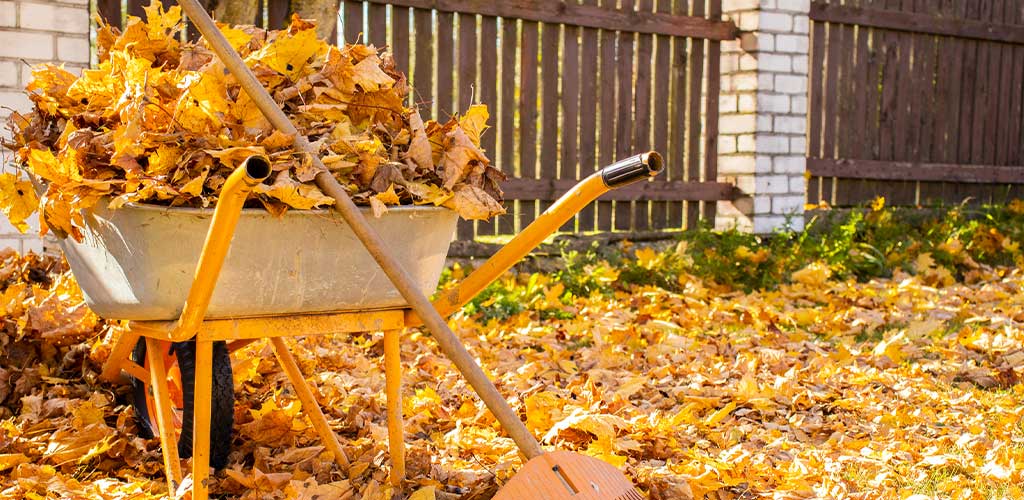
A thin scattering of leaves isn’t a problem. Trouble starts when leaves pile up, get rained on, and mat down into a wet layer.
They hold moisture against the turf. Leaves left on a lawn block light and air and hold moisture against the soil, creating the conditions where lawn diseases develop. Our post on preventing winter lawn diseases covers the ones that show up in Alabama lawns, and most of them love cool, wet, still conditions.
Leaf cover hides signs of disease or insect damage, and you don’t find out something went wrong until the leaves come off in spring.
They smother what’s still growing. Not every part of a Birmingham lawn is dormant in winter. Tall fescue, often planted in shady spots where Bermuda won’t grow, stays green and active through the cool season. When leaves get so thick you can’t see the turf underneath, they can shade out, smother, and kill grass. Shady fescue areas under big trees are exactly where leaves pile up deepest.
They slow spring green-up. A mat of leaves shades and insulates the soil, which can delay warming. Areas left covered all winter are often the last to green up in March.
Where Leaves Cause Problems Off the Lawn
The damage isn’t limited to turf.
Drains and downspouts. Leaves are the most common reason drain inlets and gutters stop working. In our post on drainage and standing water, clogged drains were one of the main causes of water sitting where it shouldn’t. A blocked drain in the wettest stretch of the year means water backs up against foundations and floods beds.
Walkways and driveways. Wet leaves on concrete are slick, and on a cold morning they can be dangerous. They can also stain your concrete.
Streets and storm drains. Leaves blown into the street end up in storm drains, where they clog the system. Keep them on the property or haul them away.
Mulch or Remove?
You don’t have to bag every leaf. Mulching leaves into the turf when the layer is light to moderate works well, and can add nutrients back into the soil. Shredded oak and maple leaves don’t add thatch, don’t increase disease, and don’t change soil pH.
If you can still see grass through the leaves, mow over them and let the pieces filter down. If the leaves are so thick you can’t see the turf, remove them. Dry leaves shred far more easily than wet ones, so mulching works best when it happens regularly rather than after a pile has been rained on for two weeks.
Leaves you pick up don’t have to go to waste either. They make good mulch for beds and good material for a compost pile. Try composting them for your spring garden.
Why Once Isn’t Enough
All of this points to the same conclusion: stay ahead of the leaves rather than catching up at the end.
Regular cleanup through the season keeps each pass light enough to mulch or remove quickly, keeps leaves from matting into a wet layer, and keeps drains clear during the rainiest months. One big cleanup in mid-December means the lawn has already spent weeks under the worst of it, and the job itself is bigger, heavier, and wetter.
Our fall leaf removal tips cover the basics of handling it yourself. If you manage a neighborhood, our post on HOA leaf management covers the common areas.
Let Us Keep Up With It
If you’d rather not spend every Saturday in November and December raking or blowing leaves, we can handle it. Steven’s Wack-n-Sack provides recurring leaf cleanup through the season, so the lawn, beds, and drains stay clear from the first drop to the last oak leaf.
We serve residential and commercial properties across Birmingham, Hoover, Vestavia Hills, Homewood, Alabaster, Pelham, Helena, Chelsea, and the surrounding area. Contact us to get on the leaf schedule.