
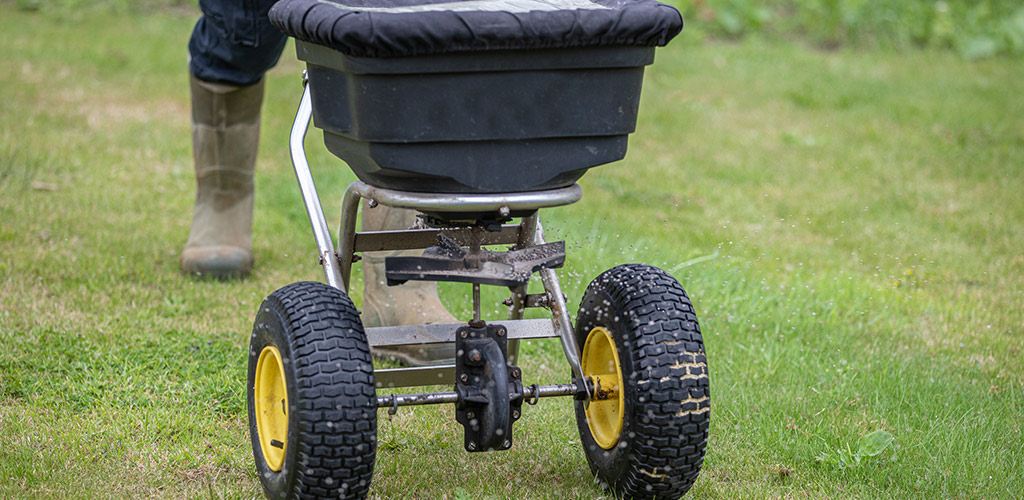
Spring fertilization is one of the most impactful things you can do for your lawn, but only if the timing is right. Apply too early and the fertilizer feeds weeds instead of turf. Apply too late and you miss the window when your grass can use it most effectively. For homeowners across Birmingham, Hoover, Trussville and the surrounding metro, understanding when your lawn is ready for its first feeding makes the difference between a strong green-up and a season of playing catch-up.
If you’ve already had your spring cut down and your lawn is starting to show new green growth, the timing for fertilization is close, or already here.
When to Apply Spring Fertilizer in Birmingham
The most common mistake homeowners make is fertilizing based on the calendar instead of what the lawn is actually doing. A bag of fertilizer applied to dormant grass in early March doesn’t help the turf, it helps whatever weeds are already actively growing.
The right trigger for spring fertilization in Birmingham is consistent soil temperature and active growth. For the warm-season grasses that dominate the metro area, Bermuda, Zoysia, and Centipede, the key indicators are:
- Soil temperatures consistently at 65°F or above (measured 4 inches deep)
- The lawn has been mowed two to three times since breaking dormancy
- New green growth is visible across the majority of the lawn, not just isolated patches near driveways or south-facing slopes
In a typical year in Birmingham, these conditions come together in mid to late April. Some years it’s earlier, some later, but the pattern matters more than the date.
Timing by Grass Type
- Bermuda grass: Usually ready for first fertilizer by mid-April. Bermuda is aggressive once it’s growing and responds quickly to nitrogen.
- Zoysia grass: Slightly later, late April into early May. Zoysia breaks dormancy slower, and fertilizing before it’s actively growing can encourage weed competition.
- Centipede grass: Requires the lightest fertilization of the three. Wait until the lawn is fully green and growing, typically late April to May. Over-fertilizing centipede is one of the fastest ways to damage it.
What Type of Fertilizer to Use
For most residential lawns in the Birmingham metro, a slow-release nitrogen fertilizer is the safest and most effective choice for the first spring application. Slow-release formulas feed the lawn gradually over several weeks, reducing the risk of burning the turf or pushing too much top growth too fast.
A few practical guidelines:
Look at the N-P-K ratio. For spring, a fertilizer with a higher first number (nitrogen) and lower second and third numbers works well. Something in the range of 15-0-15 or 16-4-8 is common for warm-season lawns in Alabama. If you’ve done a soil test, follow those recommendations instead. Your lawn may need different ratios based on what’s actually in the soil.
Consider a fertilizer with iron. Iron promotes deep green color without pushing excessive growth. For Birmingham lawns, especially those in clay soil, an iron supplement or a fertilizer with added iron can make a noticeable visual difference.
Avoid weed-and-feed combination products as your primary fertilizer. While convenient, these products often apply herbicide at the wrong rate or wrong timing for what your lawn actually needs. Separating fertilization from weed control gives you more control over both.
The Relationship Between Fertilizer and Pre-Emergent
If your lawn received a pre-emergent herbicide application in late winter or early spring, which is standard in most turf management programs, your first fertilizer application should complement that treatment, not interfere with it.
Pre-emergent creates a barrier at the soil surface to prevent weed seeds from germinating. Granular fertilizer applied on top of that barrier is fine and won’t disrupt it. However, heavy raking, aggressive dethatching, or core aeration after pre-emergent application can break the barrier and reduce its effectiveness.
How Much Fertilizer to Apply
More is not better. Over-fertilizing is one of the most damaging things homeowners do to their lawns, and it’s especially common in spring when the urge to push growth is strongest.
For warm-season grasses in Birmingham, the first spring application should deliver approximately 0.5 to 1 pound of actual nitrogen per 1,000 square feet. The product bag will tell you how much to apply to hit that rate, follow the label directions rather than guessing.
Signs of over-fertilization include:
- Rapid, dark green top growth with shallow roots
- Increased thatch buildup
- Burnt or brown tips on grass blades
- A surge in mowing frequency that’s hard to keep up with
If you’re unsure about application rates, a soil test is a great way to find out exactly what your lawn needs. It removes the guesswork and can save you money on products your soil doesn’t actually require.
Common Fertilization Mistakes in Spring
Beyond timing and rates, a few other missteps are worth avoiding:
- Fertilizing before the cut down. If the dead material from winter is still sitting on top of the lawn, fertilizer can’t reach the soil effectively. Get your spring cut down done first.
- Applying fertilizer to wet grass. Granular fertilizer can stick to wet blades and cause burn spots. Apply to dry turf and water in lightly afterward.
- Skipping the edges. It’s easy to miss the perimeter of the lawn when using a broadcast spreader. Uneven application shows up as inconsistent color. Darker green where fertilizer landed, lighter where it didn’t.
If You’re on a Steven’s Wack-n-Sack Turf Management Program
For clients enrolled in a turf management program with Steven’s Wack-n-Sack, spring fertilization is handled as part of the seasonal treatment plan. Our team monitors soil conditions, coordinates timing with pre-emergent applications, and applies the right product at the right rate for your specific lawn and grass type. You don’t need to think about when to apply or what to buy, it’s already built into the program.
Feed Your Lawn at the Right Time
Spring fertilization is a critical step, but only when the timing aligns with what your lawn is actually doing. Waiting until the grass is actively growing, using a slow-release product, and following the right application rate will give your Birmingham lawn the nutrients it needs without the problems that come from rushing the process.
Steven’s Wack-n-Sack provides professional residential and commercial lawn care and turf management services for homeowners across Birmingham, Hoover, Vestavia Hills, Homewood, Alabaster, Pelham, Helena, Chelsea, and the surrounding area. If you’d like help getting your lawn on the right program this spring, contact us for a quote.