Your lawn looked great through May and June. The spring program was solid. You’ve been watering correctly, mowing at the right height, and staying on top of maintenance. Then July hits and sections of the lawn start turning brown. The instinct is to water more, fertilize, or call someone in a panic.
Before you do any of that, there’s a good chance your lawn is doing exactly what it’s supposed to do. It’s called heat dormancy, and it’s a normal survival response for warm-season grasses during the most extreme weeks of Alabama summers.
What Is Heat Dormancy?
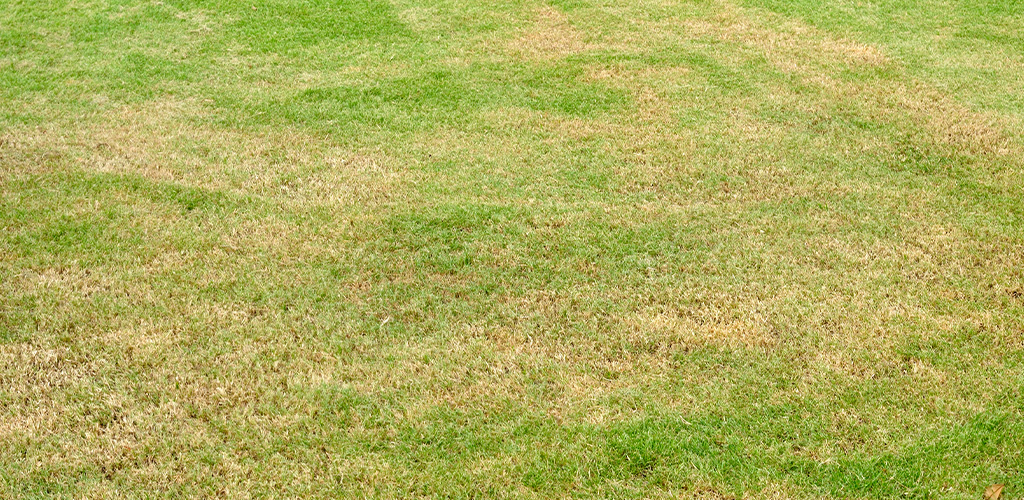
Heat dormancy occurs when sustained high temperatures and dry conditions push warm-season grasses into a protective shutdown. The grass stops actively growing and redirects energy to its root system to survive. The visible blades turn brown or tan, but the plant itself isn’t dead. It’s waiting for conditions to improve.
In Alabama, this typically happens during stretches of 95+ degree days combined with limited rainfall, usually sometime in July or early August. Even Bermuda and Zoysia, which are bred for heat, will enter partial dormancy when conditions become extreme enough.
It’s the same mechanism that causes these grasses to go dormant in winter. The difference is that summer dormancy is triggered by heat and drought stress rather than cold.
How to Tell the Difference Between Dormancy and a Real Problem
This is the critical question. Not all brown grass in July is dormancy. Brown patch fungus, chinch bugs, and irrigation failures can all cause brown turf during summer. Here’s how to tell them apart:
Heat dormancy looks like:
- A general, even browning across large areas of the lawn
- Affects the entire lawn or the sunniest, most exposed sections uniformly
- Grass blades are dry and crispy but intact
- The crown of the plant (at the soil line) is still firm and alive
- The lawn responds and greens up within a week or two when rain returns or temperatures moderate
A real problem looks like:
- Circular or irregular patches of brown in otherwise green turf (likely fungal disease)
- Brown patches concentrated near driveways, sidewalks, or hot spots that don’t match the rest of the lawn (likely chinch bugs)
- Grass that pulls up easily from the soil with no root resistance (possible grub damage)
- Brown areas that correspond exactly to one or two irrigation zones (potential irrigation system failure)
- No recovery after rainfall or supplemental watering
If the browning is widespread and uniform, it’s almost certainly heat dormancy. If it’s patchy, isolated, or doesn’t respond to improved conditions, something else is going on.
Should You Try to Prevent Heat Dormancy?
You can reduce the severity of heat dormancy by maintaining consistent irrigation, but you can’t always prevent it entirely during the worst weeks of a Birmingham summer. And that’s okay. The grass is built for this.
What matters is that you don’t make it worse by overreacting:
Don’t increase watering dramatically. If your lawn is on a proper schedule of deep, infrequent watering twice a week, stay the course. Flooding a dormant lawn doesn’t speed recovery. It wastes water and can create conditions for fungal disease.
Don’t fertilize. Applying nitrogen to a dormant lawn pushes the plant to grow when it doesn’t have the energy or water to support that growth. Wait until the lawn is actively growing again before resuming your fertilization schedule.
Don’t lower the mowing height. If anything, keep it slightly higher during peak heat. Taller grass shades the soil, retains moisture, and protects the crown of the plant. Scalping a stressed lawn in July is one of the fastest ways to cause real damage.
Don’t panic about appearance. A dormant lawn looks rough for a few weeks, but it recovers. Birmingham homeowners across Hoover, Vestavia Hills, Homewood, and the surrounding metro all experience this during the same stretches of extreme heat. Your lawn isn’t failing. It’s doing what it’s designed to do.
When to Actually Worry
There are situations where summer browning warrants action:
- The lawn doesn’t show any green recovery after a solid rainfall or two weeks of consistent irrigation
- You can pull up turf easily by hand, revealing white grub larvae underneath
- The brown areas are expanding rapidly in circular patterns with defined edges
- Birds are actively feeding on sections of the lawn (a sign of armyworm or grub activity)
If any of these apply, the issue isn’t dormancy. It’s pest damage, disease, or root system failure, and it needs to be addressed before the damage becomes permanent.
What Happens When Dormancy Breaks
Once temperatures moderate or Birmingham gets a stretch of meaningful rainfall, dormant lawns green up quickly. Bermuda can show visible recovery within 7 to 10 days. Zoysia takes slightly longer. Resume your normal mowing schedule as growth picks up, and consider a light fertilizer application once the lawn is actively growing again.
If You’re a Steven’s Wack-n-Sack Client
For clients on a turf management program with Steven’s Wack-n-Sack, our team adjusts service during heat dormancy periods. We monitor conditions across the Birmingham metro and modify mowing schedules, treatment timing, and watering recommendations based on what the turf is actually doing rather than running on a fixed calendar. If something looks like more than dormancy, we flag it early and recommend treatment before the damage spreads.
If you have questions about what’s happening with your lawn this summer, Steven’s Wack-n-Sack provides residential and commercial lawn care across Birmingham, Hoover, Vestavia Hills, Homewood, Alabaster, Pelham, Helena, Chelsea, and the surrounding area. Contact us to talk through what your lawn needs.