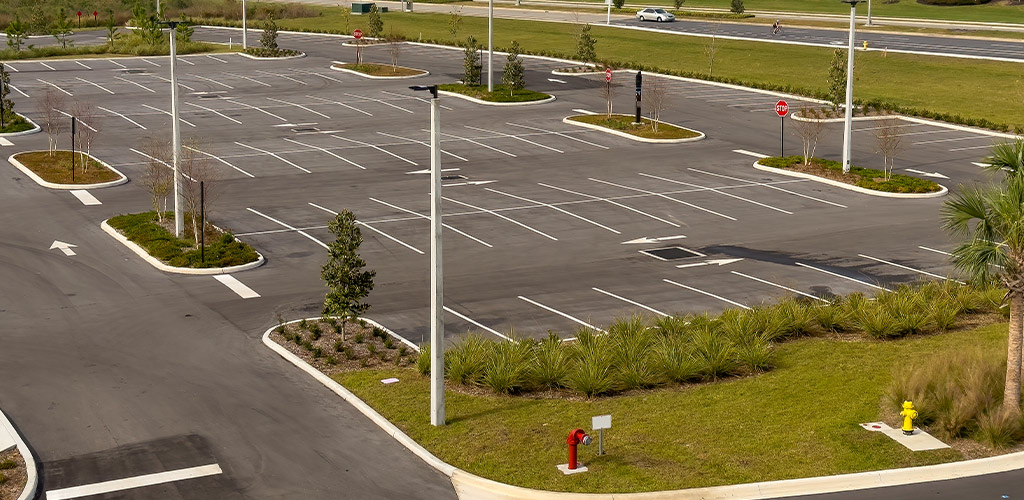
Most commercial property managers in the Birmingham metro put their attention on the entrance, the main lawn areas, and the building frontage. Those are the areas that get noticed first, and rightfully so. But there’s a category of landscape space that tends to fall off the maintenance radar until it’s visibly overgrown or deteriorated: parking lot islands and perimeter beds.
These are the narrow planting strips along property borders, the small landscape islands in parking lots, the beds around signage posts and light poles, and the turf or ground cover strips between the lot and the sidewalk. They’re small, they’re scattered, and they’re easy to overlook during routine maintenance. But when they decline, they make the entire property look unmanaged, no matter how good the entrance looks.
Why These Areas Deteriorate Faster
Parking lot islands and perimeter beds face conditions that the rest of the property doesn’t. Understanding why they decline helps explain why they need a different level of attention.
Heat stress. Asphalt and concrete absorb and radiate heat far more than turf or natural ground. Plants in parking lot islands can experience soil temperatures 10 to 20 degrees higher than the same species planted in open beds. During Birmingham’s summer, that’s the difference between manageable stress and slow decline.
Compacted soil. These areas were often backfilled with whatever was available during construction. The soil in parking lot islands is frequently compacted, poorly amended, and lacks the organic structure that supports healthy root systems.
Mechanical damage. Bumper overhangs, shopping carts, delivery vehicles, and foot traffic all take a toll. Shrubs and groundcovers in these locations get clipped, crushed, and trampled more than any other part of the landscape.
Irrigation gaps. Parking lot islands and narrow perimeter strips are often the hardest areas to irrigate properly. Spray heads get blocked by vehicles, damaged by mowing equipment, or miss the planting area entirely. The result is either too much water on one side and none on the other, or no coverage at all.
Neglect by default. In many commercial maintenance contracts, parking lot islands and perimeter areas get the same treatment as the main landscape. But they need more frequent attention because they degrade faster. When they’re maintained on the same schedule as everything else, the decline happens gradually and then becomes obvious all at once.
What Proper Maintenance Looks Like
Maintaining parking lot islands and perimeter beds doesn’t require a separate program. It requires intentional attention within the existing maintenance scope. Here’s what a well-maintained commercial property should address in these areas:
Mulch and Bed Condition
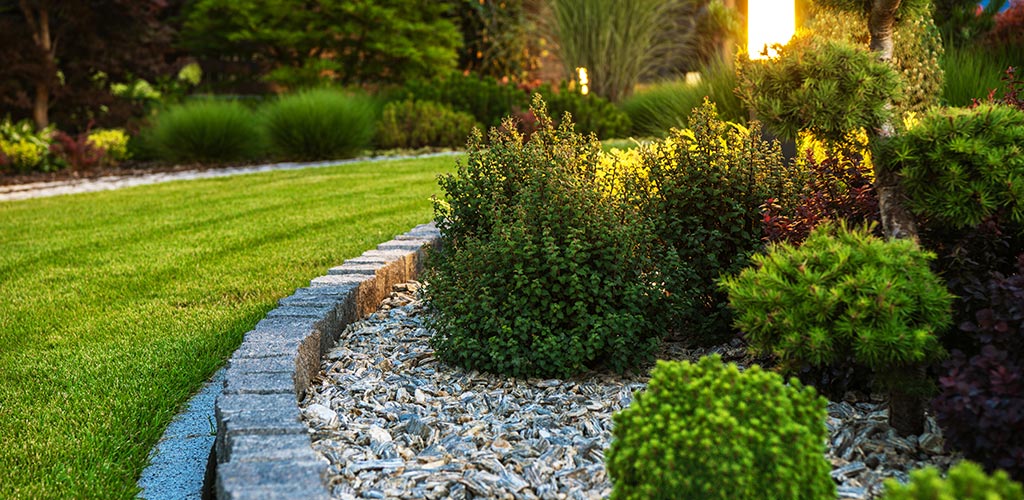
Parking lot islands lose mulch faster than open beds due to wind, water runoff, and foot traffic. A property that mulches the entrance in spring but ignores the lot islands will have bare soil and visible weeds in those areas by mid-summer. Mulch depth should be checked in these areas at least twice per season and refreshed as needed to maintain 2 to 3 inches of coverage.
Weed Control
Weeds in parking lot beds are more visible per square foot than weeds in larger landscape areas because the beds are smaller. A few weeds in a 200-square-foot entrance bed may not stand out, but the same number of weeds in a 20-square-foot parking island is immediately noticeable. Pre-emergent applications should include these areas, and spot treatment should happen during regular maintenance visits rather than waiting for a separate request.
Plant Health and Replacement
Plants in parking lot islands and perimeter beds fail at a higher rate than plants in the main landscape. Heat stress, poor soil, and mechanical damage all contribute. When a plant dies in one of these areas, the gap is obvious because the beds are small and the spacing is tight. Dead plants should be replaced promptly, not left until the next seasonal planting cycle.
Pruning and Sightlines
Overgrown shrubs in parking lot islands create safety concerns. When plantings block driver sightlines at intersections, crosswalks, or between parking rows, the property takes on both an aesthetic and liability issue. Shrubs in these locations should be kept at a height that maintains visibility, typically below 30 inches at intersection points.
Edge Maintenance
Clean edges between the parking lot surface and the planting bed create a finished look that’s disproportionately impactful for the size of the area. When bed edges erode into the lot or turf creeps into the bed, the entire island looks neglected. Regular edging during maintenance visits keeps these areas defined.
How to Address This in Your Maintenance Contract
If your commercial property’s parking lot islands and perimeter beds aren’t getting the attention they need, the first step is evaluating your current maintenance scope. A few questions worth asking your commercial landscaping provider:
- Are parking lot islands and perimeter beds included in the regular mulch schedule, or are they treated separately?
- How often are these areas inspected for dead plants, weed pressure, and edge condition?
- Is there a plan for replacing failed plants in small beds, or does replacement only happen during major seasonal changeovers?
- Are irrigation heads in these areas being checked for blockage, misalignment, or damage from vehicles?
Properties that include these areas in the regular maintenance rotation, rather than treating them as an afterthought, maintain a higher overall appearance standard with less corrective work needed later.
If You’re a Steven’s Wack-n-Sack Commercial Client
For commercial properties on a landscaping and maintenance program with Steven’s Wack-n-Sack, parking lot islands and perimeter beds are part of the property walk our crews perform during regular visits. We treat these areas with the same attention as entrance beds and primary landscape zones because we know how quickly they can drag down the overall appearance when they’re overlooked. If plants need replacement, mulch needs refreshing, or sightline pruning is due, our team can address it.
If you manage a commercial property in Birmingham, Hoover, Vestavia Hills, Alabaster, Homewood, Pelham, Helena, or Chelsea and want a landscaping partner that pays attention to the details that other providers miss, contact us to discuss your property’s needs.