Your lawn made it through the spring cut down, the first fertilizer application, and you’ve been keeping up with mowing. Everything looks like it’s on track, and then you notice a patch of brown that wasn’t there last week. You water it, thinking it’s dry. It gets worse. Another patch shows up across the yard.
In Birmingham, late April through May is when lawn pests become active enough to cause visible damage. The two most common culprits in the Central Alabama area are chinch bugs and armyworms. Both can damage a lawn quickly, but the damage patterns, timing, and treatments are different. Knowing what to look for, and when, is the difference between catching a problem early and losing entire sections of turf.
Chinch Bugs in Birmingham Lawns
Chinch bugs are small, adults are about the size of a pencil eraser, but the damage they cause is anything but small. They feed by inserting their mouthparts into grass blades, extracting plant fluids, and injecting a toxin that blocks the plant’s ability to transport water. The result is turf that looks drought-stressed even when it’s being watered properly.
What Chinch Bug Damage Looks Like
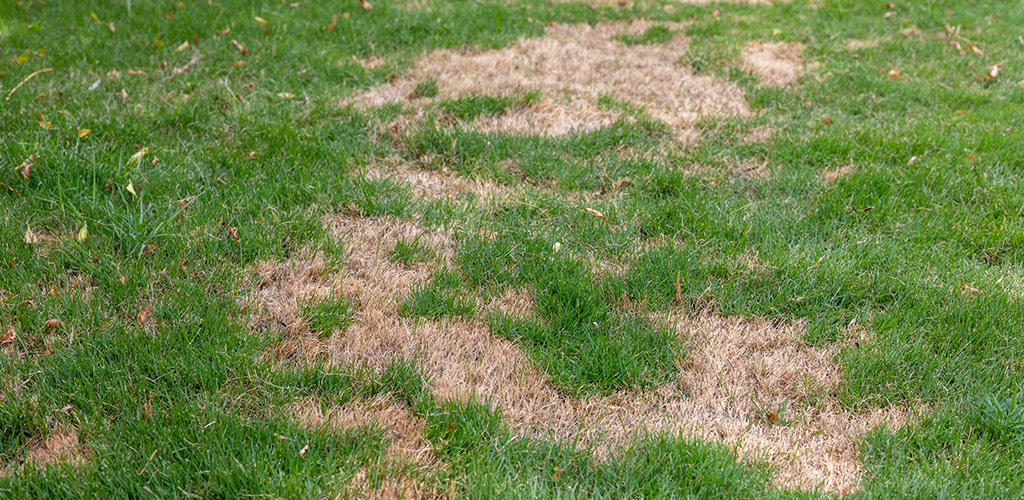
Chinch bug damage typically starts as irregular brown or yellow patches in the sunniest, warmest areas of the lawn. It’s common to see damage along driveways, sidewalks, and south-facing slopes first, anywhere that absorbs and radiates heat.
The key sign that separates chinch bug damage from drought stress is that watering doesn’t fix it. If you’ve been irrigating consistently and patches are still browning and spreading outward, chinch bugs are a likely cause.
As the infestation grows, the damaged area expands from the edges. Healthy grass next to dead grass with a clear border between them is a hallmark of chinch bug activity.
When Chinch Bugs Appear in Birmingham
In the Birmingham arrea, chinch bugs typically become active in late April to May and remain a threat through the summer. They thrive in hot, dry conditions, which is why damage is most severe in full-sun areas and during stretches without significant rainfall.
Where Chinch Bugs Hit Hardest
Across the Birmingham area, chinch bugs are most common in:
- Bermuda and Zoysia lawns in full sun
- Areas near sidewalks, driveways, and pavement that radiate heat
- Lawns with excessive thatch buildup
- Turf that’s already stressed from compaction, drought, or poor fertility
Lawns that went through a proper spring setup, cut down, pre-emergent, and fertilization, are more resilient to chinch bug damage because the turf is denser and healthier heading into the stress period.
Armyworms in Birmingham Lawns
Armyworms are a different kind of threat. While chinch bugs slowly drain the life from your lawn over weeks, armyworms can devastate large sections overnight. They’re the larvae of a moth species that lays eggs in turf, and the resulting caterpillars feed aggressively on grass blades, sometimes consuming an entire section of lawn in a matter of days.
What Armyworm Damage Looks Like
Armyworm damage is sudden and dramatic. You’ll notice patches of lawn that look like they’ve been chewed to the ground. The grass may appear ragged, with blades stripped down to the stems. In heavy infestations, the damage can span large areas seemingly overnight.
The damage often progresses in a front, the worms feed together and move across the lawn in a wave-like pattern, leaving behind bare or severely thinned turf.
When Armyworms Appear in Birmingham
Armyworms typically show up in two waves in Central Alabama. The first generation can appear in late April through May, with a second, often larger wave in late summer (August-September). The spring generation often gets less attention, but it can still cause significant damage, especially in lawns that are still establishing from the spring transition.
How to Confirm Armyworms
Armyworms feed most actively in early morning and late evening, making them harder to spot during the middle of the day. Here are a few ways to identify them:
- Birds. If you suddenly see flocks of birds feeding on your lawn, they’re likely eating armyworms. This is one of the most reliable early indicators.
- Soap flush test. Mix two tablespoons of dish soap in a gallon of water and pour it over a suspicious area. Armyworms will come to the surface within a few minutes.
- Visual inspection. Part the grass at the edge of a damaged area and look for green, brown, or striped caterpillars ranging from half an inch to about an inch and a half long.
Where Armyworms Hit Hardest
Armyworms don’t discriminate by grass type the way chinch bugs do, they’ll feed on Bermuda, Zoysia, Centipede, and Fescue. However, they tend to be most damaging in:
- Well-fertilized lawns with lush, green growth (more food)
- Lawns near open fields, pastures, or undeveloped lots where moth populations are higher
- Areas closer to rural transitions like communities in Pelham, Helena, Chelsea, Calera, and Alabaster sometimes see heavier armyworm pressure than dense urban areas
What to Do If You Spot Damage
Early detection is everything with both of these pests. The sooner you identify the problem, the less turf you lose and the faster recovery happens.
For Chinch Bugs
Treatment typically involves a targeted insecticide applied to the affected area and a buffer zone around it. Bifenthrin-based products are commonly used. Reducing thatch, maintaining proper mowing height, and watering consistently also help reduce chinch bug habitat.
For Armyworms
Because armyworms move fast, speed matters. Contact insecticides that target caterpillars are effective when applied as soon as damage is identified. Treating in the evening when the worms are most active produces better results. The lawn will typically recover within a few weeks if the worms are eliminated before they consume the crowns and stolons of the grass.
In both cases, a healthy lawn on a consistent turf management program recovers faster from pest damage than a lawn that was already stressed heading into the event.
Prevention: Why a Healthy Lawn Is Your Best Defense
Pest infestations don’t happen randomly. Chinch bugs and armyworms are more likely to cause significant damage in lawns that are already weakened by poor mowing practices, inconsistent watering, thatch buildup, or inadequate fertilization.
The spring program you’ve (hopefully) followed, cut down, pre-emergent, proper fertilization, consistent mowing at the right height, creates turf that’s dense, well-fed, and vigorous. That doesn’t make it immune to pests, but it makes the lawn more resilient when they show up and faster to recover after treatment.
If You’re on a Steven’s Wack-n-Sack Turf Management Program
Clients enrolled in a turf management program with Steven’s Wack-n-Sack benefit from regular monitoring as part of their service. Our team is on properties weekly and knows what healthy turf looks like versus early signs of pest activity. If we identify chinch bug or armyworm damage, we can act quickly and recommend treatment before the problem spreads across the property.
Stay Ahead of Spring Pests
Chinch bugs and armyworms are part of managing a lawn in Birmingham. They show up most years, and the properties that come through with the least damage are the ones that catch the signs early and respond quickly. Know what to look for, check your lawn regularly as temperatures climb, and don’t assume brown patches are just drought stress.
If you’re seeing damage you can’t explain or want professional monitoring as part of your lawn care plan, Steven’s Wack-n-Sack provides residential and commercial lawn care and turf management across Birmingham, Hoover, Vestavia Hills, Homewood, Alabaster, Pelham, Helena, Chelsea, and the surrounding metro area. Contact us to discuss your lawn’s needs.