Birmingham doesn’t have a dry season. The metro averages well over 50 inches of rain a year, and close to 15 of those typically fall in December, January, and February alone. What changes in winter isn’t the rain. It’s what happens to the water after it lands.
In July, a low spot in the yard dries out in a day. Heat, sun, and actively growing turf pull moisture out of the soil fast. In January the grass is dormant, the sun is low, and evaporation slows to almost nothing. That same low spot can stay saturated for weeks.
That’s why a drainage problem that seemed minor all summer tends to show up as dead turf, rotted shrubs, or a damp crawlspace by February. Fall is the time to deal with it, while the ground is firm enough to work and before the wettest stretch of the year settles in.
How to Tell If You Have a Problem
Walk the property during or right after a good rain. That’s when drainage is easiest to read, because you can watch where the water actually goes.
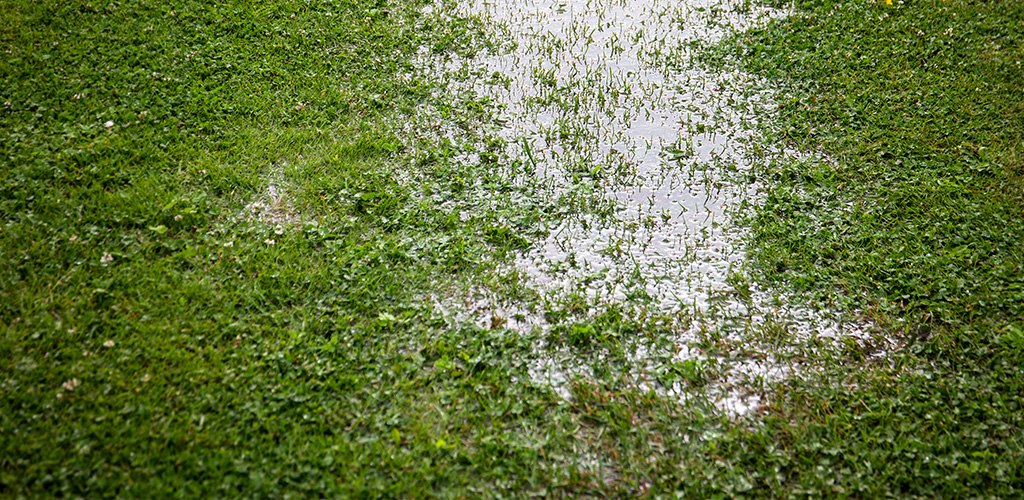
- Puddles still sitting there a day or two later
- Turf that stays soft and squishy long after the rain stops
- Moss or green algae on bare soil, which only grow where it stays wet
- Channels cut across the lawn or through beds
- Mulch washed onto the sidewalk or driveway
- Water sitting against the foundation, or a musty crawlspace
- Thin grass in the same low areas year after year. In our post on why lawns thin out over summer, drainage was one of the causes that keeps coming back until someone fixes it.
What Standing Water Does in Winter
It sets up turf disease. Dormant warm-season grass sitting in saturated soil is exactly the environment fungal problems need, and the damage often doesn’t show until the lawn tries to green up in spring.
It suffocates shrub roots. Boxwoods, azaleas, hollies, and most foundation plantings won’t tolerate wet feet for long. Roots need oxygen, and waterlogged soil doesn’t have any. You usually find out in April, when the plant browns out.
It turns into ice. The National Weather Service puts Birmingham’s average first freeze around November 9. Water that sheets across a walkway or driveway on a cold night is a slip hazard by morning.
Where the Water Usually Comes From
Downspouts. A roof sheds a lot of water in a hard rain. If the downspout empties at the corner of the house, all of it lands against the foundation or floods the bed below.
Grading that slopes the wrong way. The residential building code calls for the ground to fall at least six inches within the first ten feet from a foundation. Soil settles over time, especially the backfill around newer homes, and ground that once drained away can end up tilting back toward the house.
Compacted clay. Birmingham’s clay absorbs water slowly even in good shape. Compacted clay barely absorbs it at all, so water runs off or sits on top.
Natural low spots. Some yards simply collect water from everything around them.
Clogged drains. Existing inlets fill with leaves, mulch, and silt, and quit working without anyone noticing.
Fixes That Work
Most properties need one of these. Some need a combination.
Extend the downspouts. Moving the discharge point several feet from the foundation, or piping it underground to a pop-up emitter out in the lawn, is inexpensive and solves more problems than people expect.
Restore the grade. Adding and shaping soil so the ground falls away from the house keeps water moving in the right direction.
Relieve compaction. When water sits because the soil is too tight to take it in, opening the soil back up helps. Our SoilTech aeration service is built for exactly that problem in Alabama clay.
Install a French drain. A gravel-filled trench around a perforated pipe collects water from a problem area and carries it somewhere it can drain. It’s the standard fix for persistent wet spots along a slope, a fence line, or the uphill side of a house, and it’s work our crews install.
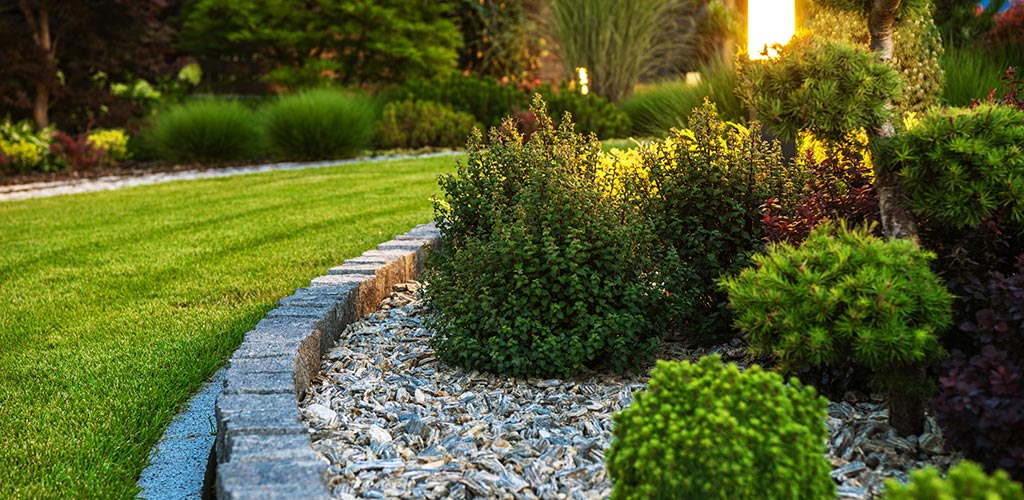
Build a dry creek bed. A rock-lined channel moves runoff and reads as a landscape feature rather than a drainage fix. It works best where water already wants to flow.
Plant a rain garden. For a low spot that will always collect water, planting it with species that handle periodic flooding turns a problem into a bed.
Why Now
Drainage work means digging. Digging saturated clay is slow and messy, it tears up the lawn, and trenching in January is nobody’s idea of a good time. Early fall gives you firmer ground and time to get the fix in place before winter rain arrives.
It also means the problem gets solved before it does its damage, instead of discovered in February when there’s little you can do until spring.
Let’s Find Where the Water Is Going
If water is sitting in your yard, pooling against the house, or washing out your beds, it’s worth a look before winter. We’ll walk the property with you, figure out where the water is coming from, and recommend the right fix, whether that’s a downspout extension, regrading, or a French drain.
Steven’s Wack-n-Sack provides landscaping services for residential and commercial properties across Birmingham, Hoover, Vestavia Hills, Homewood, Alabaster, Pelham, Helena, Chelsea, and the surrounding area. Contact us to schedule a walk-through.